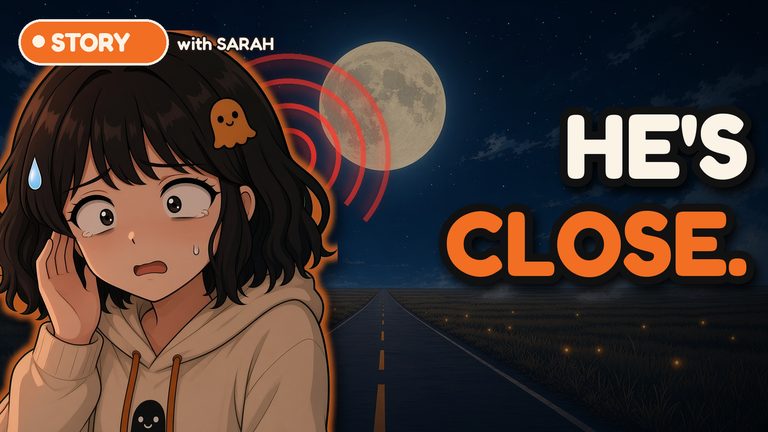
Is it far away, or near?!
Episode summary
On the plains of Venezuela, they say: if you hear a whistle close by, you're safe. But if the whistle sounds far away… he's already right beside you. 🌾
Sarah tells the story of Mateo, a night drive across the llanos, and a whistle he tried very hard to explain away, inspired by the llanero legend of El Silbón, the Whistler.
Legend: El Silbón (the Whistler), Venezuela and Colombia
Content note: rural-road folklore horror, a whistle that lies about distance, isolation, and an origin legend involving a family killing (mentioned, not described). Moral-warning folklore about drinking and cheating. Nothing graphic, no gore.
Want the real legend? The lore companion: Ep. 08: Never Whistle Back | The Whistler (El Silbón) Legend Explained
Chapters
- 00:00 Cold open
- 00:15 Content warning & hello
- 00:43 The plains of Venezuela
- 01:54 A family visit
- 03:27 The first whistle
- 05:43 The rule
- 07:21 The sack
- 10:19 The other car
- 13:10 The silent dogs
- 15:13 The recording
- 16:09 The thread
- 17:54 The second night
- 19:03 Back home
- 21:18 Outro
Transcript
Read the full episode transcript
On the plains of Venezuela, they say that if you hear a whistle close by, you’re safe. But if the whistle sounds far away, he’s already right beside you. Quick warning, this one is about a ghost on a dark country road, with nothing graphic, so if you’re like me, lean in and be prepared to be spooked. Hey friends! I’m Sarah, and welcome back to Spoopycast, your cozy way to be terrified. Tonight’s story takes you down a night road in Venezuela, and it’s about El Silbón, the Whistler, a ghost whose whistle sounds farthest away when he’s closest. So grab your softest blanket, turn the lights down low, and let’s go.
So the other night I fell down one of those rabbit holes where you keep telling yourself “just one more article.” I ended up bouncing between Latin American folklore threads and travel blogs, which really should not be open at the same time. That’s how I found posts about the Llanos, the huge plains of Venezuela. It’s cattle country, with a wide sky and long, flat roads. At night those roads can be empty enough to make your phone feel lonely. And out there, sound carries farther than you’d expect. Then people started naming something else, el Silbón, the Whistler, something that lives in sound. A tall, thin figure carrying a sack over his shoulder, and a whistle that breaks the rules of distance.
Once I read that rule, I couldn’t put it down. The version that got me wasn’t the history-book one — Steve’s covering that next time. It was the story of a guy who was just visiting family. He took a night road he thought he knew, and he heard a whistle he tried very hard to explain away. We’ll call him Mateo.
Mateo isn’t his real name. He was scared enough already without strangers hunting down his username. So I’m going to tell you what he said happened, and what people found when they went looking afterward. Mateo was visiting family in Portuguesa, a farming state out on the western plains. This wasn’t a ghost tour. It was cousins, aunts, big dinners, and a suitcase that smelled like someone else’s laundry soap by day three. He grew up hearing bits of plains stories the way you hear family recipes. Half remembered, half teased, and always followed by “don’t be dramatic.” His cousins still lived out there. They still drove roads with more night than streetlights.
And they still joked about ghosts the way people joke about things they don’t fully stop believing. One night the family stayed up way too late. There was music and food, and stories that started funny and slowly got quieter. Mateo’s aunt mentioned the Whistler the way you’d mention rain. Casual, with a little shrug of respect. “Don’t whistle at night,” somebody laughed. Somebody else said that wasn’t the rule — the real rule was worse, the real rule was about listening. Mateo offered to drive his cousin home. We’ll call her Camila. The road looked simple on the map, but it felt a lot longer in the dark. It wasn’t a dirt track out of a horror movie.
It was a real paved road, with the odd light and then long stretches of nothing. Camila was tired enough to say yes. Mateo was tired enough to pretend he wasn’t. The first twenty minutes were boring in the best way. The radio was low and the windows were cracked. The warm air smelled like dust and faraway rain. Camila scrolled on her phone. Mateo watched the road very carefully, the way you do when you’re driving in a country you don’t live in anymore. Then the radio dropped out for a second. Just a soft blank and a little static, and then the song came back like nothing happened. Mateo tapped the dashboard out of habit.
Camila didn’t look up. And then he heard it. Not a scream, and not a car horn. A whistle. It was high and thin, and almost pretty. And it sounded close. Right outside the passenger window, like someone was walking along the shoulder beside the car. Mateo checked the mirror. The shoulder was empty and so was the road. Camila was still scrolling. “Did you hear that?” he asked. She frowned. “Hear what?” He laughed it off, wind through the window, a glitch on the radio, tired ears. Camila offered him some gum, he took it, and they kept driving. Then it came again. Same thin note, same sweetness. But this time it was far away, out across the plain, like someone whistling from a line of trees much too far off to matter.
And that’s when Mateo’s stomach dropped! Because his aunt’s story from dinner was suddenly riding along with them. Camila finally looked up. “What?” “Whistling,” he said. He tried to sound casual, and he didn’t manage it. “You really don’t hear it?” She listened. She heard nothing. Or she said she heard nothing, which is not as comforting as it sounds when your whole body is on alert. So Mateo did what we all do now when something weird happens. He started a voice memo on his phone. The little red light came on, and he whispered, “If it happens again, I’m keeping it.” They kept driving, a bit faster now, but not so fast that it looked like they were running.
Camila put her phone face-down in her lap. Somehow that felt worse than the whistling. People only put their phones down when the night needs both hands. Then the whistle came close again. So close Mateo flinched like it was in the back seat. Camila still heard nothing, the record light just kept blinking.
That’s when Mateo told Camila the rule, the way he remembered it from dinner. When the whistle sounds near, the Whistler is far away. When the whistle sounds far, the Whistler is near. Camila stared at him. “Our aunt says that to scare kids,” she said. Then, quieter: “She also says it when she’s not joking.” They hit a stretch with no lights at all. Just headlights, tall grass, and a darkness that made distance feel like a guess. The whistle came and went, close, then far, then close again. It never came from a direction Camila could agree on. Once it almost seemed to be keeping pace above the car.
Too high for a person on the roadside, and too steady for the wind. Camila did the practical thing. She called her brother. The call dropped twice and connected on the third try. She put him on speaker and asked if anyone else was out on that road. He said no. Then, sounding like a local who’s annoyed to be asked about ghosts, he said, “Don’t stop the car.” They didn’t stop. They didn’t speed either, because crashing into a ditch while running from a legend helps nobody. Mateo kept both hands on the wheel. Camila kept the call open like a lifeline. Her brother just talked about normal things. Leftovers in the fridge.
“Where are you now?” “Five more minutes.” Plain, human sentences that held the night together. Then Mateo heard something that wasn’t a whistle. A soft, dry clack, like sticks knocking together, like bones settling in a bag, it wasn’t loud. It was just there, the way you suddenly notice the hum of a fridge. It came from Camila’s side of the car, and also from nowhere at all.
And this time, her brother heard it too. “What was that?” he asked over the speaker. This time the phone had caught it. Camila went very still. “Don’t look for it,” she whispered. Mateo looked anyway, of course he did, the headlights swept across empty grass. No figure, no sack, no giant shape walking through the treetops like in the old drawings. Just the road and the dark, and the feeling that someone had rearranged the dark while he wasn’t looking. Then the whistle came back, far away this time. So far it should have felt like a relief. It didn’t. Mateo had done the math by now, and the math said near.
Somewhere along that stretch, the whistle changed. It didn’t get louder. It started to sound like it was coming from inside the car, buzzing through the metal frame like a cheap speaker rattling a door. Camila pressed both palms flat against the dashboard, as if she could push the sound back out. “I hear it now,” she said. Mateo had wanted her to say that all night. Now he wished she hadn’t. He asked her where it was coming from — she pointed at the roof, then the floor, then the empty back seat. Her brother said, “Describe it,” like he was taking a report. And Camila said, “It’s the rule.
It’s doing the rule.” Mateo started listing the sensible explanations out loud — a crosswind, a motorbike far behind them. A bird, or one of those night insects that sounds like a tiny kettle. Camila nodded at each one, politely, like she was humoring him. Then the whistle went far away again, soft and almost beautiful, and Mateo gripped the wheel until his knuckles went pale. More of the dinner story came back to him. A tall, thin man, with a hat in some versions. A sack of bones in almost all of them. Dogs that hunt him forever, because the curse came with dogs. And chili peppers and a whip, which people say keep him away.
He also remembered the part people say more quietly. That the Whistler goes after drunks and men who cheat — Mateo hadn’t been drinking, he hadn’t been chasing anyone, he was just on the road. But the stories say he doesn’t always choose fairly. And that’s the part that gets me, not the moral lesson. The idea that it might not matter whether you did anything wrong.
Camila told him to talk, just talk, about anything normal, so he did. He talked about the flight, and their aunt’s cooking, and the cousin who still owed him twenty dollars from 2019. Somewhere in the middle of describing a very boring airport sandwich, the whistle slid in under his words. Far away, polite, and terrible.
Then headlights appeared up ahead, another car, normal, boring, human headlights. Mateo wanted to climb into that other car more than anything. As it passed, he looked. He couldn’t help it. For half a second he thought he saw something tall standing in the grass behind it. A tall, upright shape, maybe with the edge of a hat. Then it was only grass again. The other driver didn’t slow down — why would they, normal people have places to be.
Once that car was gone, the plain somehow felt even bigger. Mateo’s voice memo was still recording. He asked Camila if she wanted him to stop. She said no. If something was going to happen, she wanted proof. They dipped into a low stretch where fog was lying across the road. Mateo slowed right down. The whistle went so far away it was barely there at all. And if you remember the rule, that’s the worst sign of all. Camila started quietly praying the rosary under her breath. Mateo didn’t join in out loud. But right then, he respected every protection anyone had ever told him about. Chili, dogs, saints, seatbelts, and a full tank of gas.
Then, in the fog, came the clacking again — closer this time, dry and steady, it wasn’t footsteps, it sounded more like counting. Soft knocks, one after another, like someone sorting sticks. Or bones. “Do you hear that?” Mateo asked. Camila nodded once. On the phone, her brother went quiet. The kind of quiet that means the joke is over. “If he’s counting,” her brother said carefully, “you’re supposed to hear it. That’s good, in the stories. If you hear him count the bones, the house is safe. Or the people inside, depends who’s telling it.”. “We’re not a house,” Mateo said. “I know,” her brother said. “I’m making it up as I go.”
Then the counting stopped. The whistle came back, close and soft, like a breath on the window glass. Mateo flinched so hard the car drifted toward the shoulder. Camila grabbed the wheel with him, and together they pulled it back. Nobody spoke for ten long seconds. Then Camila said, very small, “He’s not counting anymore.” Mateo’s phone buzzed in the cupholder. Just some app notification. The most normal sound in the world, and it made them both jump. He didn’t check it, he just drove, the fog thinned out. The road went back to being a road. The whistle drifted far away again, and then, for a while, it was gone.
He didn’t know if the silence was mercy or a trick. Camila’s street finally appeared, porch lights and all. Mateo parked and just sat there for a minute. Camila’s brother came out to meet them. And the yard dogs didn’t bark. That stuck with Mateo more than the whistle did. The dogs stood watching the road, ears forward, mouths shut. Like they’d already decided this night wasn’t theirs to fight. Inside, somebody made coffee. Mateo played the voice memo. At first it was just car noise and the crinkle of Camila’s gum wrapper. Then, thin and wrong, there was the whistle. Close on the recording, then far. Then that soft clack, clearer than it had any right to be on a phone speaker.
Their aunt listened once and quietly made the sign of the cross. She didn’t say the Whistler’s name like a joke. She said it like a weather report. She asked Mateo if he’d been drinking. He said no. She asked if he’d whistled back. He said absolutely not! That seemed to make her relieved and more worried at the same time. While the coffee cooled, she told the version she tells children and the version she tells adults. Mateo realized they were the same story, just with different manners. A spoiled son, a terrible crime against his father, a grandfather’s curse. A sack of bones he has to carry forever, a whistle, and dogs at his heels for all time.
She didn’t add gory details, she didn’t need to. She said people out there still keep chili peppers handy. She said people still listen for the counting. And she said tourists want selfies with the Whistler statue at a theme park up in the mountains, while locals just want the roads empty after midnight. Mateo asked if she’d ever heard him herself. She looked at him for a long time, like she was deciding between an honest answer and a kind one. “I’ve heard whistling,” she said. “I’ve heard wind. I’ve heard men coming home late, pretending to be brave. And once, only once, I heard something that made the dogs go quiet, like tonight.
I did not go outside to check. Checking is how stories get new chapters.” Later that night, Mateo was on the couch, wrapped in a blanket that smelled like laundry soap and childhood visits. He played the recording one more time. Same file, same timestamp, same length. But the whistle part was thinner now — shorter, like someone had edited it, the clack was still there, the whistle sounded farther away, or closer, he honestly couldn’t tell. He tried to screenshot the sound wave on the screen. The screenshot saved as a black rectangle — he tried again, black again. So he sent the file to Camila. She played it and heard the whistle just fine.
Ten minutes later she texted him: “Play it again.” He did. On his phone, the whistle was almost gone. Just a soft smear of noise where the note used to be. On her phone it stayed clear for about an hour. Then hers started fading too, like the file was aging in real time. Recordings that fade on their own get me every single time. So Mateo posted about it online. Not with his face, and not with the exact road, because he didn’t want strangers driving out there. Just a careful, anonymous post. Heard whistling on a road in Portuguesa — recording glitched, dogs wouldn’t bark, family said the name.
He asked if anyone else had heard the whistle break the distance rule. He asked if anyone else had recordings that faded. The first replies were jokes. Of course they were. “It’s the wind.” “Your aunt got you good.” Mateo almost closed the tab. Then the quieter replies started coming in. A truck driver said a whistle sounded close for twenty kilometers, and his passenger never heard it once. A woman said her grandfather taught her to throw hot peppers toward the sound, and never to explain why to tourists. Someone linked an old radio telling of the Whistler legend, read out like local news. And someone wrote, “If you hear him counting, you’re lucky.
If you don’t hear him counting and the sack drops anyway…” Mateo stopped reading that one halfway through. One reply got deleted an hour later. It said the whistle had once followed a family after they moved. Not onto a plane, just across town on a bus route. A soft, far-away note outside their new apartment window for three nights, then nothing. Mateo screenshotted it before it disappeared. But in the screenshot, the text was blurred. Other replies said the Whistler was never real at all. They said he’s a story to keep husbands from wandering home drunk, and to keep kids inside at night. A story with a lesson built in.
Mateo believed that, and he also didn’t. A story can be useful and still scare you half to death. On his second night back at his cousins’ house, Mateo woke up around three in the morning. He thought he heard whistling outside, far away, soft as a rumor, he opened the curtain, the street was empty, the porch light was on. And the yard dogs were standing again, silent, all facing the same direction.
He filmed the empty street on his phone. The video shows nothing useful. Just dark, bugs, and a moth circling the porch light. But on playback there’s a thin tone under the background noise. It might be wind. It might be the thing that made his aunt cross herself. He didn’t post it. He kept the file until morning. By then it had been renamed to just a string of numbers, and he has no idea how. Before he flew home, Camila walked him to the door. She teased him, and then she pressed a tiny packet of chili into his hand. It was a joke that wasn’t really a joke.
“For the road,” she said. “And don’t answer if something whistles your name.” “It didn’t say my name,” Mateo said. Camila’s face fell a little. “Yet,” she said. Yet. Back home, Mateo tried to be done with it all. He told himself it was wind and tired nerves and a family story in a good costume. He told himself the fading audio was just file compression. He told himself quiet dogs are just quiet dogs. Then, a week later, Camila messaged him late at night. She sent a screenshot from a local group chat. Someone on a nearby road had posted that they heard whistling that sounded far away. In the morning they found a torn scrap of sacking on the roadside, and the dogs in three houses wouldn’t go outside.
No one was hurt, there was no crime scene. Just a post somewhere between a joke and a warning, and the whole chat went quiet for a few minutes. Mateo asked if she was okay. She said yes. She also said their aunt had started keeping an old whip by the door again. Mateo used to think it was just decoration. He didn’t ask any more questions. When I found Mateo’s thread, I went looking too. Not at the road — I’m not that brave. Just into the write-ups. Steve’s going to walk you through the real history next time. Where the story came from, the radio version that made it famous across Venezuela, and the parts people still treat like weather.
What I can tell you is how Mateo’s thread ended. There was no big finale. He didn’t solve it, and he didn’t see anything. He said the recording on both phones is basically blank now where the whistle used to be. He said he still flinches when a kettle whistles. He said he doesn’t know what happened on that road. And he said that if you’re ever driving out on the plains at night, and something sounds safely far away… Don’t relax, keep the car moving. His cousin still texts him normal things. Memes, recipes, “Auntie says hi.” And sometimes, not often, she sends a voice memo of nothing but night insects.
No caption, just checking in with the dark. Because once you’ve heard the rule, you can’t un-hear it. When the whistle sounds close, they say you’re safe. When the whistle sounds far… And… that’s the story. We made it off that road. You made it, I made it, and we’re still intact. Thanks for listening to episode seven of Spoopycast. If this one hooked you the way it hooked me, come hang out at spoopycast.com for episodes, updates, and the merch shop at spoopycast.com/merch if you want to wear the spooky on purpose. We’re @spoopycaster on the socials. Same handle, same chaos. Got your own weird story? A personal encounter, a town legend, a sound you still can’t explain?
Send it to stories@spoopycast.com. I will read them, I will vibrate, and I will pretend I’m fine. No named supporter shoutouts tonight, but you can get your name here when you sign up to be a member on our website! Every listen, every share and every “okay but wait, what?” text to a friend helps us build this, and it counts. If this one got under your skin, send it to the friend who always offers to drive home late. And tell me in the comments, what sound at night would make you keep driving and never look back? Stay vigilant, and maybe don’t whistle back at the dark. And if something far away whistles just for you…
Keep driving. Stay spoopy!
Transcript from the episode captions; it may differ slightly from the audio.
Mateo and Camila are fictional. The story is an original tale inspired by Venezuelan and Colombian llanero folklore.