
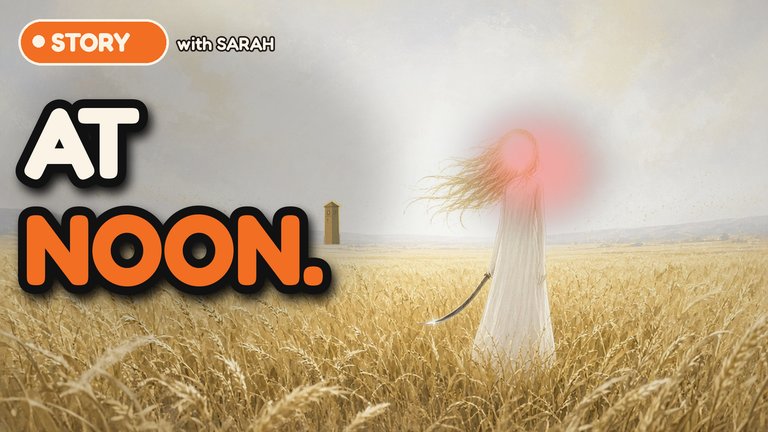
Tell Me How the Rye Is Ripened | Polish Folklore Horror Story (Lady Midday)
Episode summary
At noon, in a rye field in eastern Poland, the wind can stop like someone pressed pause. Sarah tells the story of Nina, a remote worker staying on her grandmother's farm in a heatwave summer: a house rule that nobody stays in the field at noon, a dog that won't go past the gate, a whirlwind that walks through the grain without bending it, and a tall woman in white who starts a question she means to finish. Inspired by the Slavic folklore of Lady Midday (Południca).
Legend: Lady Midday (Południca), Poland
Content note: a heatwave, heat illness and a Slavic field-spirit legend with folkloric threats, told without graphic detail. Nothing graphic, no gore.
Want the real legend? The lore companion: Ep. 12: A Noon Ghost or a Heat Warning? | Lady Midday (Południca) Lore
Chapters
- 00:00 Cold open
- 00:19 Content warning & hello
- 00:57 A ghost who comes out at noon
- 02:17 Nina and Babcia’s farm
- 03:11 The house rules
- 03:48 Looking it up
- 04:32 The empty fields
- 05:17 The dog at the gate
- 05:32 The man with the hay
- 06:17 The ninth day
- 06:54 Noon
- 07:28 The whirlwind
- 07:57 The woman in white
- 08:47 Walking back
- 10:18 Tell me how the rye is ripened
- 10:32 The other rule
- 10:58 One subject: bread
- 12:26 She listened
- 13:07 One o’clock
- 13:34 Grandma and the water
- 14:20 Heat exhaustion
- 14:46 The white video
- 15:34 Honey and bread
- 16:15 The replies
- 16:58 Every noon since
- 17:44 The last post
- 19:02 Outro
Transcript
Read the full episode transcript
At noon, in a rye field in eastern Poland, the wind can stop like someone pressed pause. The insects stop, your shadow disappears under your feet. And a soft, dry voice starts a question it means to finish. Quick warning, this one is a heatwave and a grandmother’s noon rule, with nothing graphic, so if you’re like me, lean in and keep a cold drink close. Hey friends! I’m Sarah, and welcome back to Spoopycast, your cozy way to be terrified. Tonight’s story is about Południca — po-woo-DNEE-tsah — Lady Midday, the Slavic field spirit who walks the rye at the hottest hour and asks you questions you had better be able to answer.
You can find us at spoopycast.com, and we’re at @spoopycaster on the socials. So grab your softest blanket, turn the lights down, and let’s go. So here’s a confession. Every spooky story I love happens at night. Red rooms at two in the morning — whistles on dark roads, lights over paddies. I have trained my whole nervous system to relax the second the sun comes up. And then I found out about a ghost who only comes out at noon. I was in a classical-music rabbit hole, don’t laugh, it happens, listening to a Dvořák piece, that’s DVOR-zhahk, called The Noon Witch. The description said it was based on a Czech ballad, and the ballad was based on a folk spirit, and the folk spirit is Południca, Lady Midday.
She walks the rye at the hottest hour of summer, tall, in a white dress, sometimes with a sickle. And she stops people who are still working when they should be in the shade, and she asks them questions. Hard questions. And you have to keep answering. If you stop, or stumble, or try to change the subject, well. The old stories are pretty blunt about that, and we’ll leave it there. And once I saw that, I couldn’t stop reading. Because the version that got me wasn’t only a nineteenth-century poem. It was a heatwave, a phone flashing a temperature warning. A woman filming a field at exactly the wrong time of day.
We’ll call her Nina. Nina isn’t her real name. She’s been very clear she doesn’t want her family’s village turning into a pilgrimage spot, and honestly, fair. What I can tell you is what she said happened, in the posts she wrote that and what turned up when people went looking after she stopped answering. Nina works remotely. Spreadsheets, video calls, the glamorous life. Her grandmother, her babcia, that’s BAB-chah, lives on a small farm in eastern Poland. A few fields, a garden, a dog she refuses to name, and a kitchen that always smells like bread. Every summer she says she’ll visit for a week, and every summer it turns into That year was the heatwave year.
The news maps went that deep red that looks like a warning label. The rye around the house had gone gold early, tall and dry and whispering, and the air above the road did that wobbly mirage thing. The first morning, Grandma gave Nina the house rules over coffee. Shoes off inside. Don’t let the dog have sausage. Close the gate. And, this one she said while cutting bread, not even looking up, nobody stays in the field at noon. Nina laughed. She thought it was a heat thing. Which, sure, it is a heat thing. Her grandmother didn’t laugh back. She just set down the knife and said, you come in when the bell rings, you sit in the shade, you drink water, and you don’t go back out until the noon hour is over.
Nina said, “Yes, Grandma,” in the voice you use for grandmothers and airport security, and then she went upstairs and looked it up. And she found the basics. A spirit of the fields. A woman in white, sometimes young, sometimes an old hag, sometimes just a whirlwind of dust, with a sickle or shears. She stops people who work through the noon heat and asks them questions, and if they can’t answer, or change the subject, the old stories get blunt. Aching necks, fainting, and madness. In the old reading, she’s what heatstroke looked like before anyone had the word. Okay, a noon lady, walking. Cool. Nina read that last line and felt relieved — heatstroke, okay.
Grandma’s just using a scary story to make sure people drink water. That should have been the end of it. The first week was fine. Hot, but fine. Nina worked in the mornings, helped in the garden later, and spent noon on the cool kitchen floor with the dog. Every day, from the village church a few kilometers away, a bell rang, and Grandma would stop, cross herself, and come inside. And Nina started noticing that she wasn’t the only one. The neighbor’s tractor stopped at noon. The old man who cut hay by the road was always gone by the bell. Even the kids disappeared from twelve to one. The fields went completely empty.
Just gold rye, that heat shimmer, and the buzz of insects she couldn’t name. Which, for someone who makes the occasional pretty video, was a problem. Empty gold fields under a white sky. That’s a shot. On the fifth day, the dog, who follows Nina everywhere, stopped dead at the back gate at about ten to twelve. Nina tugged his collar, called him a coward, even offered him cheese. Nothing. He sat with his back to the rye until she gave up. On the sixth day, she walked to the village shop and passed the old man packing up his hay. She asked him, half joking, if he was hiding from the noon lady too.
He didn’t laugh. He looked at the sky, then at her, and said, very politely, that his mother had met her once, in 1950-something. She’d been nineteen and stubborn and stayed out to finish a row of hay, came home at one o’clock unable to turn her head, and never worked a field at noon again. Then he tipped his cap and got on his bicycle. Nina asked her grandmother about it that night. Grandma was peeling potatoes. She said, “His mother was a sensible woman after that.” And then, after a long pause, “So was mine.”
And that was all she would say. So on the ninth day, Nina waited until her grandmother went to lie down with a late-morning headache, and she slipped out the back gate with her phone. I would have done this too. It was 11:52. She checked. The phone was already warm in her hand. The sky had that bleached look where there’s no blue left, just glare. She walked down the dirt path between two fields of rye, the stalks almost shoulder height, and she started filming. Slow pan. Wind moving through the heads of grain like a hand through hair. At noon the bell rang in the distance. Twelve strokes, faint and flat across the fields.
And the wind stopped. Not slowly. All at once. The rye went still like someone had pressed pause. The insects stopped. Nina says the silence had a weight to it, like walking into a room where people have just stopped talking about you. She looked down and realized she didn’t have a shadow. Which, okay, noon, high sun, that’s physics. But it still hit her wrong. Like she’d been erased a little. Her phone buzzed. A system notification: the phone needed to cool down before she could use it. The screen dimmed, the camera app closed itself. And out in the rye, maybe fifty meters away, a little whirlwind of dust lifted off the path.
You’ve seen dust devils, little twisters of dirt and chaff, totally normal on hot days, nina knew that. She watched it turn, tight and tall, wander into the rye, and the rye didn’t That’s the detail she kept coming back to. The whirlwind went through the grain and the grain didn’t bend. And then it wasn’t a whirlwind anymore. It was a woman. Tall, taller than anyone Nina had ever seen, standing in the rye so the grain came up to her waist. A long white dress, plain linen, like something from an old photograph. Hair loose and very pale, like straw that’s been in the sun too long. And she was holding something at her side that caught the light in a long curved flash.
Nina says she couldn’t see the face. Not because it was hidden. Because the light was wrong around it, like looking at the sun in a windshield. Your eyes just slide off. And the woman turned toward her. And Nina heard a voice, soft, dry, and close, like someone speaking right beside her ear, even though the woman was still fifty meters away. Tell me… Oh no, absolutely not! I do not like an unfinished sentence from a lady in a field. Nina tried to pretend it wasn’t happening. She turned around and started walking back toward the house. Not running. She says she had this very clear, very childish feeling that if she ran, it would count as an answer.
The path back to the gate was maybe three hundred meters. She walked, and the rye on both sides stayed perfectly still, and the heat pressed down on the top of her head like a hand. And when she looked up, the gate wasn’t closer. It just wasn’t closer, the way a mirage stays the same distance down the road. And the woman in white was standing on the path in front of her. Not fifty meters away now, ten. Tell me how… Nina said her first thought was, and I love her for this, “I don’t know anything about anything. I work in spreadsheets.” Because she had read the rules the night before.
The noon spirit asks about farm work. How the flax is grown. How the hemp is soaked and prepared. How the rye is ripened. Things every farmer would have known by heart two hundred years ago. And if you can’t answer, you’re hers. Nina could not have told you how flax is grown if her life depended on it. Which she was starting to suspect it did. Her neck began to ache. Right at the base of her skull, a slow pressure, like someone resting two fingers there. The light got whiter. The edges of everything started to fizz. Tell me how the rye is ripened. That’s the one, so polite, so simple.
Like a teacher who already knows you didn’t do the reading. Nina opened her mouth and nothing came out. The figure lifted the sickle, not fast, not threatening exactly. Just lifting it, patient. And then Nina remembered the other rule. There’s a version of this legend, it comes from the Sorbian people, that’s SOR-bee-un, a Slavic minority in eastern Germany written down by folklorists more than a century ago, that says if the noon spirit catches you, you have to talk to her for a full hour about one and the same thing. One subject, no stopping, no wandering off-topic. Until the noon hour is over and she has to go.
Nina didn’t know about rye, she didn’t know about flax, but she knew about bread. She had watched Grandma make it every summer since she was four. So she started talking. She says her voice came out hoarse and stupid. She said, “The rye, I don’t know how it’s ripened. But I know what happens after. My grandmother makes bread.” And the figure didn’t lower the sickle. But it didn’t move either. So Nina kept going. She talked about the sourdough starter her grandmother keeps in a crock on the windowsill, the one she calls by a nickname like it’s a pet. How Grandma never measures anything, just takes handfuls, and how the first time Nina tried to copy her she made a brick so heavy the dog wouldn’t eat it.
She talked about the kitchen at five in the morning, Grandma humming the same three lines of a hymn she never finishes. How she cuts a cross into the top of every loaf, and says something under her breath, and when Nina asked what, her grandmother said, “Thank you,” and wouldn’t explain who to. Every time Nina ran out of words, the light got whiter and the ache in her neck got worse. Every time she found the next sentence, it eased. So she didn’t run out. She talked about the heel of the loaf, still warm with butter and salt, and about the year her grandmother’s hands started to shake and Nina had to do the kneading, and understood that one day she would be the one who knows how to make this bread.
She says she started crying somewhere in there. She kept talking anyway. And the figure listened. That’s what got me when I read it. Nina wrote: I don’t know how to explain it, but she was listening. Not like a monster waiting for me to mess up. Like someone who used to know all of this and forgot.
and then? Oh, that one gets me, not a threat, a prompt, and then? So Nina told her and then. The loaves cooling on the rack. How bread is the thing you bring when someone is born, and when someone gets married, and when someone dies. She doesn’t know how long she talked. Her phone was dead in her hand, overheated, black. Just the white sky, the still rye, her own cracked voice, and the tall shape in front of her that didn’t blink. And then, very far away, the church bell rang.
One stroke. One o’clock. The wind came back all at once. The rye bent and hissed like nothing had happened. Insects started up again mid-buzz. And the woman in white was gone, or there was a dust devil spinning away across the field, small and ordinary, breaking up at the treeline. Nina says her knees just quit. She sat down in the dirt in the middle of the path. That’s where her grandmother found her about ten minutes later, with a bottle of water and an expression Nina described as worse than any ghost. She didn’t ask what happened. She made her drink the whole bottle, and walked her back to the house with an arm around her waist.
On the way, Grandma said one thing. In Polish, quietly. Nina translated it later as: What did you tell her? Not what did you see, not are you okay, what did you tell her. And Nina said, “Bread.” And her grandmother nodded like that was the correct answer on a test.
That evening Nina had a fever and a headache like her skull was two sizes too Grandma called the neighbor, who drove her to a clinic in the nearest town, and the doctor said heat exhaustion, possibly mild heatstroke. Rest, fluids, stay inside in the middle of the day. Which is, I want to point out, exactly what her grandmother said on day one. I love a rational out, I hold it with both hands, but. When Nina’s phone cooled down and turned back on, the video she’d been filming was there. Forty-one seconds. Rye in the wind, the bell faint in the background, and then, at exactly the moment the bell finishes, the image goes white.
Not glare, not lens flare. Just pure white for the rest of the clip. The audio keeps going, though. You can hear the wind stop, and Nina breathing, and very faintly, under the breathing, something that might be a voice, or might be the hiss of a dead field. She tried taking photos of the path the next morning, from the yard. Every one came out overexposed, pictures of the bread: fine, pictures of that White. And her neck. The ache at the base of her skull didn’t go away with the fever. It stayed for weeks, not terrible, just there, like two fingers resting. A few days later, the old man with the hay came by with a jar of honey.
He handed it to Nina’s grandmother over the fence, and Nina caught exactly one word she understood: Chleb, that’s hleb. Bread. When he left, Grandma put the honey on the table and said, “He says his mother talked about her sisters. The whole hour. Every name, every wedding, every child.” She sat down. “Everyone has something they can talk about for an hour. The trick is knowing what it is before you need it.” Nina asked her, “What would yours be?” And her grandmother just smiled and tapped the crock with the sourdough starter on the windowsill, and said nothing at all. So of course she posted about it. And the replies poured in.
Someone said heatstroke hallucination, end of story, and honestly, that person might be right. Someone said the camera was damaged by the heat, which also sounds plausible and which I hate. A woman from Slovakia wrote that her grandmother used to say the noon spirits were the souls of brides who died before their weddings, which is why they’re always in white, and that maybe that’s why the figure listened when Nina talked about a family kitchen. And then someone asked the question that started the real argument: Did you go If that were me, I would be calling my mom and a priest. And also maybe a farmer, so I have a backup answer.
Nina didn’t answer that one for almost a week. When she did, it was short. She said she was still at her grandmother’s, and she hadn’t gone back into the field at noon, and wasn’t planning to. But she said something else that I can’t stop thinking about. She said that every day since, at noon, when the bell rings and she sits in the kitchen with Grandma and the dog she can feel the heat press against the house. And sometimes, not every day, she hears the rye go quiet all at once. And she sits at the table and talks, out loud, to nobody, about bread, until the bell rings one o’clock.
Grandma doesn’t tell her to stop. Nina said she just slides a glass of water across the table and listens too. I have so many feelings about that, and most of them are goosebumps. Then, near the end of that summer, she posted one more time. A photo, the only clean one, she said, she’d managed to take of the field all summer. It was at dusk, everything gold and soft and harmless. And in the middle of the path, right about where she’d sat down in the dirt, someone had left a heel of bread on a linen cloth. She said she didn’t put it there. She said her grandmother swore she didn’t either.
She said the next morning it was gone, and the cloth was folded. And that was it. That was her last post. The account went quiet after that, not deleted, just quiet, the way people go quiet when they’ve decided some things are better kept in the kitchen. I don’t know what happened to Nina. I don’t know if she ever learned how the rye is ripened. I hope she did. Though honestly, I think bread was a really good answer. Tell me… And if you’re listening to this somewhere hot, maybe find some shade. We’re a podcast, not your grandma. But if the wind stops all at once, and your shadow disappears under your feet, and a soft dry voice starts a question it means to finish…
pick the one thing you love most. And don’t stop talking until the bell rings. And… that’s the story. We made it to one o’clock. You made it, I made it, and we’re still intact. Mostly. Thanks for listening to episode eleven of Spoopycast. If this one hooked you the way it hooked me, come hang out at spoopycast.com for episodes and updates and the merch shop at spoopycast.com/merch if you want to wear the spooky on purpose. We’re at @spoopycaster on the socials. Got your own weird story? A grandparent rule nobody would explain, a field you don’t walk through at a certain hour? Send it to stories@spoopycast.com. I will read them, and I will vibrate.
No named supporter shoutouts yet, but if you’d love to hear your name read out right here, sign up to be a member on our website, you could be the very first one! Every listen and every share helps us build this, and it counts. If this one got under your skin, send it to the friend who always stands too long in the sun. And tell me, what would you talk about for a whole hour? And for real: heat is no joke. When it’s scorching out, take the noon break — drink water, sit in the shade. Check on your grandparents and your neighbors. The noon spirit or no noon spirit, Grandma was right.
And if someone in a white dress asks you how the rye is ripened… You tell her about bread. Stay spoopy!
Transcript from the episode captions; it may differ slightly from the audio.